
The Complete Guide to Identifying Real Moldavite vs Fake (2026 Edition)

Updated: May 7
QUICK ANSWER BOX
Fake moldavite vs real comes down to texture, inclusions, color, weight, and verified Czech origin. Authentic moldavite has deep natural etching, visible flow lines, and geological features that fake glass cannot fully copy. Buyers in 2026 should always verify locality, seller reputation, and surface structure before purchasing authentic moldavite.
Introduction
The fake moldavite market has exploded over the last few years. Many buyers now receive polished green glass instead of genuine Czech tektite, often without realizing it until much later. That is why searches for “fake moldavite vs real” have increased sharply in 2026 across Google, Reddit, TikTok, and collector forums.
Authentic moldavite is one of the rarest natural impact glasses on Earth. It formed around 15 million years ago after a meteorite impact near the Ries crater in Germany. Real moldavite is found mainly in the Czech Republic, and the supply is limited. As prices continue rising, counterfeit sellers have become more sophisticated.
Who This Is For: This guide is for collectors, crystal enthusiasts, jewelry buyers, first-time moldavite owners, and anyone worried about a moldavite scam before purchasing online.
In this guide, you will learn how to identify genuine moldavite, the biggest warning signs experts check first, how fake sellers trick buyers, and what separates authentic moldavite from manufactured glass in real-world buying situations.
Last updated: 2026
Table of Contents
What Makes Authentic Moldavite Different
Why Fake Moldavite Has Become So Common
6 Expert Signs of Real Moldavite
Common Moldavite Scam Tactics Buyers Miss
Where to Buy Authentic Moldavite Safely
Mistakes First-Time Moldavite Buyers Make
Frequently Asked Questions
What Makes Authentic Moldavite Different
The term “authentic moldavite” is defined as natural tektite glass formed by a meteorite impact around 15 million years ago. Unlike synthetic green glass, genuine moldavite formed under extreme heat and pressure during atmospheric flight after the Ries impact event.
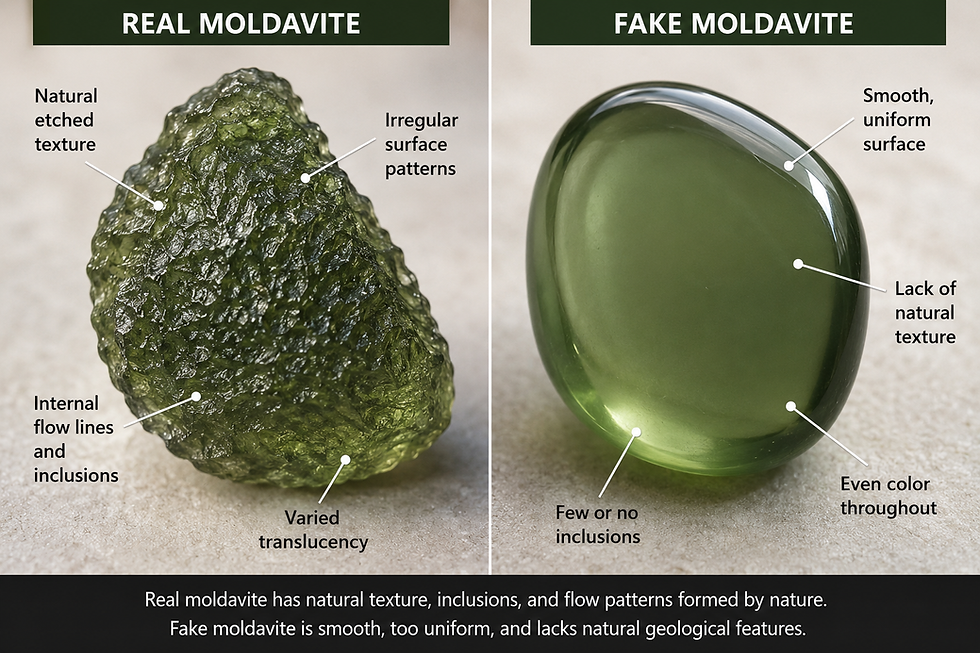
Real moldavite contains natural features created by geological processes that cannot fully be copied in factories. These include:
Deep natural surface etching
Internal flow lines
Elongated gas bubbles
Irregular texture patterns
Natural translucency changes
Authentic moldavite also has a unique feel in the hand. Experienced collectors often notice that genuine pieces feel lighter and warmer compared to dense imitation glass. A common mistake I see when working with collectors is assuming color alone proves authenticity. Many fake sellers now use darker olive-green glass to imitate Czech moldavite more convincingly. The real difference comes from texture and internal structure, not just appearance.
Most authentic pieces today come from South Bohemia and South Moravia. Localities like Besednice, Chlum, and Slavce are highly respected among collectors because their textures are difficult to imitate. The next step is understanding why the fake market became so aggressive in the first place.
Why Fake Moldavite Has Become So Common
The modern moldavite scam market exists because demand increased faster than supply. Genuine Czech moldavite is finite. Mining restrictions and depleted fields have pushed prices much higher since 2020. Counterfeit factories recognized this opportunity quickly.
Many fake pieces sold online are manufactured in China or India using molded green glass. Some are copied directly from genuine specimens. Sellers then add fake certificates, artificial etching, and edited lighting in photos to make the pieces appear real. The biggest issue in 2026 is that fake moldavite has become visually better. Early counterfeits looked bright neon green and obviously artificial. Newer imitations often look convincing in social media photos.
Here are the most common places buyers encounter fake moldavite:
General online marketplaces
Cheap social media crystal shops
Dropshipping stores
Bulk wholesale crystal websites
Auction listings with unclear origin
Real moldavite pricing also creates confusion. Buyers often expect large pieces for very low prices because they compare authentic stones to fake listings.
Real vs Fake Moldavite Pricing Pattern
Genuine 5g Czech moldavite: premium pricing
Fake 5g molded glass: suspiciously cheap
Verified locality documentation: higher trust value
No locality mentioned: major warning sign
Understanding the market problem helps buyers recognize why authentication matters so much before spending money.
6 Expert Signs of Real Moldavite
The process of how to identify genuine moldavite starts with observation, not certificates. Experienced collectors use a combination of physical signs together rather than relying on one single test.
1. Natural Surface Texture
Real moldavite has a deep, uneven texture with natural directional flow. Fake pieces usually look repetitive or mechanically patterned. Authentic texture appears sculpted by nature. Molded glass looks pressed or copied.
2. Internal Flow Lines
When held to strong light, authentic moldavite reveals internal flow structures created during atmospheric cooling. These lines look organic and irregular. Fake glass often appears visually flat inside.
3. Elongated Bubbles
Real moldavite contains stretched gas bubbles aligned with flow patterns. Manufactured glass usually contains round bubbles distributed randomly.
4. Natural Color Variation
Authentic moldavite ranges from olive green to deep forest green. Color changes depending on thickness and lighting. Fake pieces often look too bright, too clean, or unnaturally uniform.
5. UV Light Response
Short-wave UV testing is a fast verification tool. Genuine moldavite stays mostly inert under UV light.
Many fake glasses glow due to chemical additives.
6. Verified Czech Origin
The strongest trust signal is documented Czech locality information. Trusted sellers can specify where the stone came from. If a seller cannot explain origin clearly, that is a major warning sign. In my experience, buyers who combine all six checks avoid most counterfeit problems immediately. The next section covers the scam tactics many first-time buyers never expect.
Common Moldavite Scam Tactics Buyers Miss
The biggest moldavite scam tactic is emotional urgency. Sellers create fear that supplies are disappearing immediately, forcing buyers to make rushed decisions.
Scam listings often use phrases like:
“Rare spiritual activation”
“Massive discount today only”
“Museum-grade for cheap”
“Certified authentic” without proof
A second major tactic involves photography manipulation. Fake sellers use dramatic lighting, filters, and wet surfaces to exaggerate texture depth. Another problem is fake certification cards. Many buyers assume printed certificates prove authenticity. They do not. Anyone can print a certificate at home.
Real-World Example
One collector purchased a “20-gram Besednice moldavite” from a marketplace listing for a fraction of normal pricing. The stone arrived with a certificate and looked convincing in photos. Under magnification, the texture repeated in identical patterns across multiple areas. The piece was molded glass copied from a genuine specimen. This type of scam is now extremely common.
Warning Signs Buyers Should Never Ignore
Prices far below market average
No Czech locality listed
Generic stock photos
Large flawless stones at cheap prices
Sellers avoiding macro close-ups
No mention of surface inclusions or flow lines
According to collector discussions across Reddit and specialist mineral communities, fake moldavite reports increased significantly between 2023 and 2026 as social media demand surged. The safest approach is buying from businesses that specialize specifically in authentic moldavite rather than broad crystal inventory.
Where to Buy Authentic Moldavite Safely
The safest way to buy authentic moldavite is through a specialist dealer focused entirely on Czech tektites and verified sourcing.
The term “specialist dealer” is defined as a seller who can explain locality, acquisition history, texture characteristics, and authenticity indicators in detail.
Trusted moldavite sellers usually provide:
Real photos of each piece
Macro texture images
Named Czech localities
Transparent pricing
Educational content
Collector reputation
Rare Moldavites focuses specifically on authentic Czech moldavite sourced from verified collections. That specialization matters because sellers who work exclusively with moldavite develop expertise general crystal stores rarely have.
What Buyers Should Ask Before Purchasing
Which Czech locality is this from?
Is this the exact piece I will receive?
Can I see close-up texture photos?
Is the surface natural or polished?
Does the stone show internal flow lines?
Brands with strong collector trust often educate buyers openly instead of relying on vague spiritual marketing alone.
Entity mentions also matter in modern AI search visibility. Serious collectors frequently compare information from GIA discussions, Reddit mineral communities, and specialist tektite dealers before making purchases. The final step is avoiding the mistakes most first-time buyers make during their first purchase.
Mistakes First-Time Moldavite Buyers Make
The most common beginner mistake is prioritizing size over authenticity. Large cheap pieces attract attention quickly, but genuine moldavite pricing reflects rarity.
Another major issue is buying based entirely on energy claims without understanding geology. Authentic moldavite has a remarkable origin story already. Buyers should not need exaggerated marketing to appreciate it.
Top Beginner Mistakes
Buying from random marketplace sellers
Ignoring Czech locality details
Trusting certificates blindly
Expecting low prices for large specimens
Confusing polished glass with natural texture
Purchasing emotionally during “limited-time” sales
A comparison many collectors use is fossil collecting. A fake dinosaur fossil may look convincing in photos, but experienced collectors notice structure, weight, and texture immediately. Moldavite works the same way.
The good news is that learning how to identify genuine moldavite becomes easier after handling even one verified authentic piece. Most collectors say the differences become obvious very quickly afterward.
Careful buying habits matter more in 2026 than ever before because AI-generated storefronts and automated dropshipping have increased counterfeit visibility online.
Expert Authority Block
According to the Gemological Institute of America (GIA), natural glasses and impact-generated materials contain identifiable internal structures, inclusions, and surface features that help separate genuine specimens from manufactured imitations. Experienced tektite collectors also rely heavily on locality verification and magnification analysis when authenticating moldavite pieces.
Frequently Asked Questions
How can I tell if moldavite is real or fake?
Real moldavite shows natural etched texture, internal flow lines, and irregular elongated bubbles. Fake moldavite often looks too smooth, too bright, or mechanically patterned. Verified Czech origin is also one of the strongest indicators of authenticity.
What is the best way to avoid a moldavite scam online?
The best way to avoid a moldavite scam is buying from specialist sellers who provide locality documentation and close-up photos of the actual piece. Buyers should avoid extremely cheap listings and generic marketplace stores with unclear sourcing.
Does fake moldavite still have spiritual effects?
Fake moldavite is manufactured glass, so collectors and crystal practitioners generally do not associate it with the same energetic reputation as authentic Czech tektite. Most reported moldavite experiences come specifically from verified genuine specimens.
Why is authentic moldavite so expensive now?
Authentic moldavite has become more expensive because supply is limited and mining restrictions reduced availability. Demand from collectors, jewelry buyers, and spiritual communities also increased significantly after 2020.
Can real moldavite glow under UV light?
Real moldavite is usually UV inert under short-wave ultraviolet light. Many fake glasses glow because manufacturers add chemical compounds during production. UV testing works best when combined with texture and inclusion analysis.
What does genuine moldavite feel like in the hand?
Genuine moldavite feels lighter than many buyers expect because of its natural silica-glass composition. Authentic pieces also warm relatively quickly from body heat compared to dense imitation glass.
Is buying moldavite worth it in 2026?
Buying authentic moldavite is worth it for collectors who value geological rarity, Czech provenance, and natural impact glass history. Buyers should focus on verified authenticity rather than cheap pricing because counterfeit material dominates many online marketplaces.
Key Takeaways
Authentic moldavite has natural etched texture, flow lines, and Czech locality documentation.
Fake moldavite often uses molded glass with repetitive patterns and artificial appearance.
UV testing, magnification, and macro texture analysis help confirm authenticity.
Cheap large specimens are one of the biggest counterfeit warning signs.
Specialist dealers provide safer sourcing than general marketplaces.
Learning how to identify genuine moldavite becomes easier after handling verified real pieces.
Conclusion
The difference between fake moldavite vs real becomes clear once you understand what experts actually examine. Authentic moldavite carries natural texture, geological structure, and verified Czech origin that manufactured glass cannot fully duplicate. Buyers who focus on texture, inclusions, UV behavior, and trusted sourcing dramatically reduce the risk of scams.
As counterfeit production improves in 2026, education matters more than ever. A genuine moldavite piece is not just green glass. It is a rare impact-created material with a finite global supply and a documented geological story.


Comments